AI Fraud Detection for Insurance & Financial Services
Why AI-Generated Evidence is Creating New Risk for Financial Services
Generative AI has fundamentally shifted insurance fraud risk, making convincing synthetic documents and imagery easier to produce than ever. Traditional review workflows weren’t built to catch these high-fidelity signals — they were designed for crude, manual forgeries.
Humanly sits within high-volume claims operations as an authenticity layer, surfacing technical indicators that help human reviewers maintain decision integrity without slowing down processing.
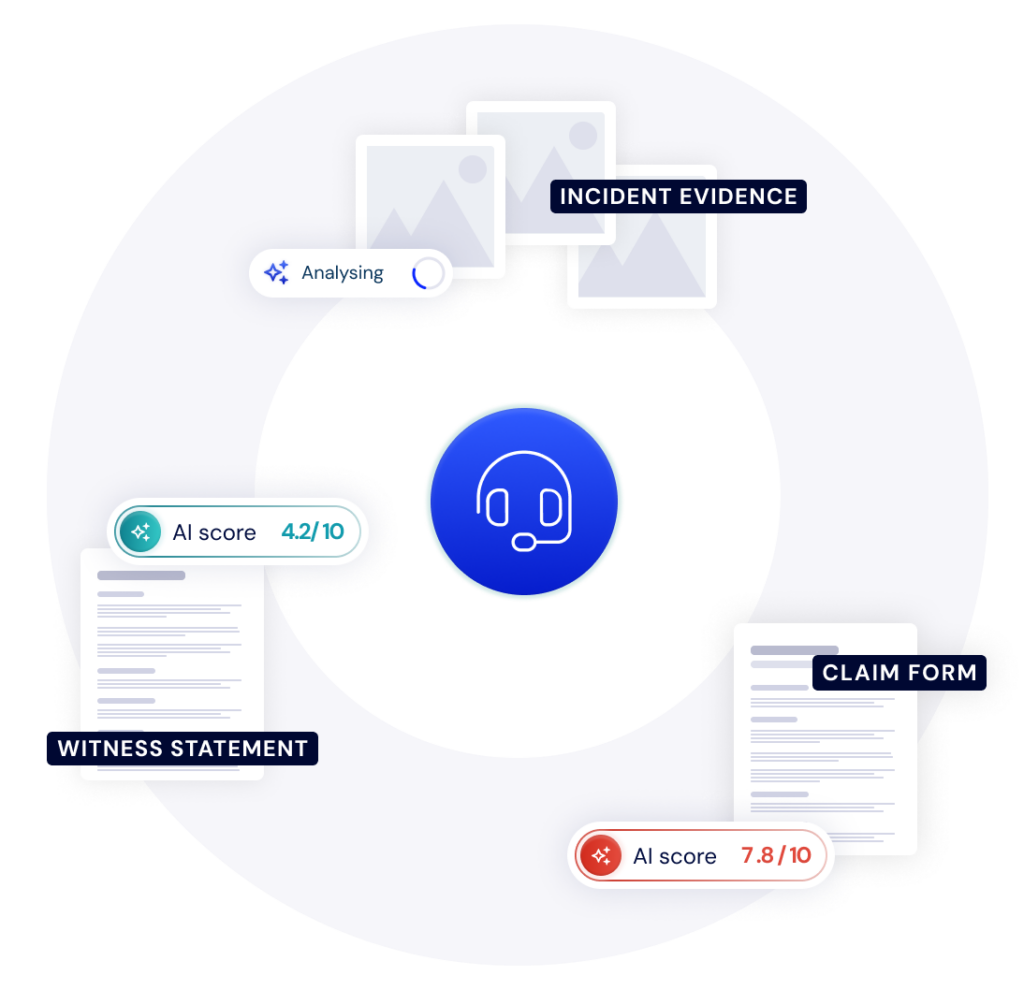
How Humanly Supports Claims and Risk Teams
Humanly is designed to function as an authenticity layer within existing review workflows, providing claims and risk teams with technical signals to evaluate submitted evidence at scale. The platform identifies potential indicators of AI manipulation early in the process, allowing reviewers to prioritize high-risk cases while maintaining final decision-making authority. Humanly helps organisations reduce the operational strain of manual inspection and supports more consistent, evidence-led risk decisions.
Analyses authenticity signals in submitted evidence
Evaluates documents, images, and other submitted content for patterns that may indicate AI generation or manipulation.
Supports human reviewers with prioritised risk signals
Rather than replacing manual review, Humanly is designed to guide it. Reviewers receive structured insights that help them triage cases more consistently.
Helps teams focus review effort where it matters most
By highlighting potentially higher-risk submissions earlier in the workflow, Humanly helps organisations allocate investigative effort more efficiently.
Operational Benefits for Financial Services Teams

Enhanced Operational Efficiency
Humanly is designed to reduce the manual burden of examining low-risk evidence by surfacing specific authenticity signals that require closer inspection. This allows claims and risk teams to maintain high-velocity workflows without compromising the depth of their review process.

Standardised Decision Integrity
By providing a structured set of authenticity signals, Humanly helps teams apply consistent review standards across large volumes of evidence. This technical baseline supports more uniform risk triage, even as the complexity of AI-generated or manipulated submissions increases.

Sustainable Scaling for Digital
As the volume of digital evidence rises, Humanly provides an analytical layer that helps organisations manage increasing workloads without a linear expansion of manual resources. This approach allows existing teams to maintain oversight of the shifting risk surface through more efficient, signal-led evidence verification.
Common Questions
How does Humanly identify synthetic document manipulation?
The platform analyses digital artifacts for structural and pixel-level indicators of AI generation that are often invisible to human reviewers. This includes evaluating technical signals within passports, utility bills, and bank statements to determine if the evidence is authentic or fabricated.
Does this replace my current Identity Verification (IDV) provider?
No. Humanly is designed to integrate into a layered fraud strategy alongside existing IDV and risk partners. It provides a specialized focus on document authenticity, helping to answer whether the digital evidence itself appears to be genuine.
What types of identity evidence can be analysed?
The service evaluates a wide variety of documents, including passports, driving licenses, payslips, and bank statements. It is also designed to analyse supporting evidence used to establish eligibility or affordability.
Why is authenticity verification now a strategic requirement?
As digital-first journeys become the default, the ability to reliably verify evidence is critical for reducing avoidable losses and maintaining regulatory trust. Organizations that can distinguish between authentic and synthetic evidence early in the journey are better positioned to prevent chargebacks, defaults, and policy abuse.
How does Humanly identify synthetic identity across multiple applications?
Synthetic identity is often difficult to detect because elements of the fabricated persona appear consistent across various data checks. Humanly addresses this by analysing the physical evidence—such as images and document scans—for technical indicators of AI generation or manipulation. By identifying these non-authentic markers at the document level, organizations can disrupt coordinated fraud rings that attempt to use consistent, but synthetic, identities across multiple services.
Can Humanly detect "deepfakes" and realistic synthetic media?
Yes. The platform is specifically designed to analyse images and digital documents for signs of AI-amplified manipulation. As deepfake technology becomes more accessible for impersonation and document falsification, Humanly provides an analytical layer that goes beyond manual review to identify the subtle technical inconsistencies inherent in synthetic media.